
 Menu
Menu Close
Close
Project Management
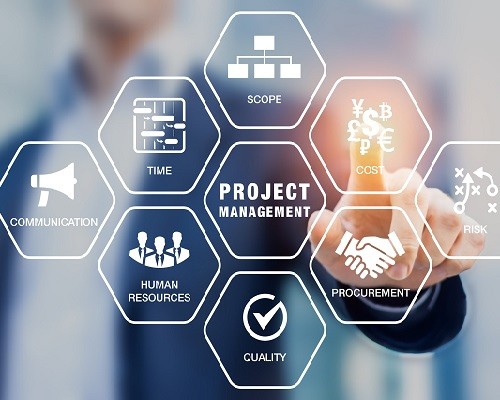
Project management is the process of leading a team to achieve specific goals within a set timeframe. It involves planning, organizing, and overseeing the execution of tasks to ensure that the project is completed on time, within budget, and according to the required quality standards.
Key components of project management include:
-
Project Initiation: Defining the project, identifying its objectives, and establishing its scope. This phase often includes feasibility studies and stakeholder analysis.
-
Project Planning: Developing detailed plans, including the schedule, budget, resources, and risk management strategies. This phase is crucial for setting clear expectations and ensuring the project stays on track.
-
Project Execution: Coordinating people and resources, managing stakeholders, and ensuring the work is being carried out according to the plan. It also involves quality control and performance monitoring.
-
Monitoring and Controlling: Continuously tracking the progress of the project and making adjustments as necessary to stay on target with timelines, budget, and quality. This phase includes performance measurement, issue resolution, and change management.
-
Project Closure: Finalizing all tasks, delivering the completed project, obtaining stakeholder approval, and closing the project. This phase also involves evaluating the project's success and documenting lessons learned.
Key skills for project managers include leadership, communication, problem-solving, time management, risk management, and negotiation.
Common methodologies used in project management include:
- Waterfall: A linear, sequential approach where each phase must be completed before moving to the next.
- Agile: An iterative and flexible approach that allows for adjustments as the project progresses, often used in software development.
- Scrum: A subset of Agile that uses short, focused iterations called sprints to complete tasks.
- PRINCE2: A process-based methodology focusing on organization and control.
- Lean: Focuses on maximizing value by minimizing waste and optimizing processes.